
Wildfire Insurance in Colorado
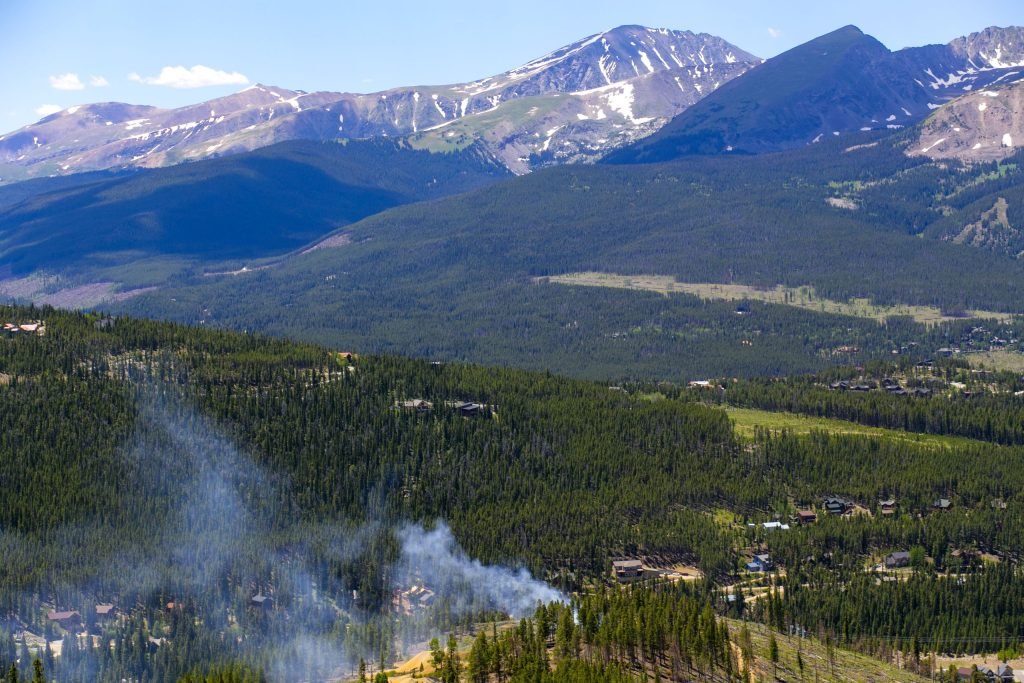
Colorado is now the sixth most expensive state in the country for homeowners insurance. The average annual premium has climbed to $4,072 for a standard $300,000 coverage policy — a 57.9 percent increase from 2018 to 2023, according to Colorado State University’s Regional Economic Development Institute. For homeowners in mountain and foothills communities, the numbers are far worse. Premium increases of 150 to 300 percent are common in high-risk wildfire zones, and some properties in Boulder County, El Paso County, and the I-70 corridor are seeing annual premiums exceed $8,000 to $10,000.
At the same time, non-renewal notices are surging. Colorado experienced a 77 percent increase in homeowners insurance non-renewals from 2018 through 2023, and the trend has continued into 2025 and 2026. Thousands of homeowners receive non-renewal letters each year — even those with long, claim-free histories. Some carriers have stopped writing new policies in high-risk zones entirely.
This isn’t just a wildfire problem. Hail is the other major driver, and Colorado consistently ranks near the top nationally for hail damage claims. But wildfire is the more actionable risk, because homeowners can directly mitigate it. And for the first time, Colorado law now requires insurers to reward that mitigation work.
House Bill 1182, signed in May 2025 and effective July 1, 2026, is the most significant wildfire insurance legislation in Colorado history. It requires insurers to disclose their wildfire risk models, incorporate property-specific mitigation into their pricing, provide homeowners with a written wildfire risk score, and allow formal appeals.
This guide explains the full picture: why premiums are rising, what HB 1182 changes, how to document your mitigation work for insurance benefit, what the Colorado FAIR Plan covers (and what it doesn’t), and the concrete steps you can take right now to improve your position.
Why Colorado Homeowners Insurance Premiums Have Nearly Doubled
To understand where the insurance market is headed, it helps to understand why it got here. Colorado’s insurance crisis isn’t the result of any single event — it’s a convergence of factors that have been building for more than a decade.
Wildfire losses have fundamentally changed how insurers view Colorado. The Marshall Fire in December 2021 destroyed 1,084 homes and exceeded $2 billion in insured losses. It remains the most destructive wildfire in Colorado history — and it didn’t burn in a remote mountain canyon. It burned through suburban neighborhoods in Superior and Louisville, communities that most residents and insurers had never considered high-risk. Combined with the Fourmile Canyon Fire (169 homes, 2010), the Black Forest Fire (511 homes, 2013), the Waldo Canyon Fire (347 homes, 2012), and the Cameron Peak Fire (2020), Colorado’s wildfire history has made carriers increasingly cautious about writing policies anywhere near the Wildland-Urban Interface.
Hail compounds the problem. Colorado’s hail season generates billions in property damage claims annually. Most years, for every dollar a Colorado insurance company collects in premiums, it pays out $1.25 in claims. That’s not a sustainable business model, and carriers are responding by raising premiums, tightening terms, or leaving the market.
Reinsurance — the insurance that insurance companies buy — has tripled in cost for wildfire exposure. Carriers pass those costs directly to homeowners. This is why premiums are rising even for homeowners who’ve never filed a claim and whose individual properties haven’t changed. The entire risk pool has gotten more expensive.
Rebuilding costs have surged. Construction costs in Colorado jumped 35 to 50 percent from 2020 to 2024. A home that cost $300,000 to build now costs $450,000 or more to replace. Carriers that underpriced policies for years are now correcting aggressively.
New wildfire risk models are reclassifying properties. Areas previously rated “moderate” risk are being reclassified as “high” or “extreme” based on updated fire behavior modeling, climate data, and vegetation analysis. Carriers use satellite imagery, third-party data, and automated risk scoring to identify hazards like aging roofs, overgrown vegetation, and proximity to wildland fuels. Many homeowners are shocked to discover their risk classification has changed — and their premiums along with it.
What This Looks Like by Region
The impact varies significantly across Colorado, but no mountain or foothills community has been spared:
Boulder County remains one of the hardest-hit markets. The Marshall Fire zone is essentially unwritable for most carriers. Existing policyholders in the foothills — Sunshine Canyon, Flagstaff, Pine Brook Hills, Gold Hill — face the most aggressive premium increases in the state, with average premiums of $4,500 to $8,500 and some properties exceeding $10,000 annually.
El Paso County carries the combined weight of the Waldo Canyon Fire (2012) and the Black Forest Fire (2013). Carriers are extremely cautious, and new business is limited to properties with verified Class A roofs and documented defensible space of 30 feet or more.
Jefferson County — particularly Evergreen, Conifer, Morrison, and Genesee — faces selective underwriting. Most carriers require property inspections and mitigation verification before quoting.
Summit and Eagle Counties (Breckenridge, Vail, Frisco, Silverthorne) see the additional complication of second homes. Carriers are limiting exposure in resort communities, and seasonal vacancy clauses are increasingly common. If you own a mountain property as a second home, expect additional scrutiny and potentially higher premiums than a primary residence in the same area.
The Front Range is seeing rising non-renewal rates, particularly in rural and eastern areas. The Marshall Fire demonstrated that even communities far from traditional mountain fire zones are vulnerable under the right conditions — high winds, dry grass, and ember transport can threaten any property along the urban-wildland interface.
HB 1182: What Colorado’s New Wildfire Insurance Law Means for Homeowners
House Bill 25-1182, signed into law in May 2025 and effective July 1, 2026, represents the most significant change to wildfire insurance regulation in Colorado in decades. It doesn’t solve the insurance crisis overnight, but it fundamentally shifts the relationship between homeowners, insurers, and mitigation work.
Here’s what the law actually requires.
Five Provisions Every Colorado Homeowner Should Know
1. Model Transparency. Insurers that use wildfire risk models, catastrophe models, or scoring methods must disclose those models publicly and to the Colorado Division of Insurance. For the first time, homeowners will be able to understand how their wildfire risk is calculated and what factors drive their premiums. This matters because many homeowners have had no way to know why their premium doubled or why they received a non-renewal — the models were proprietary black boxes.
2. Mitigation Must Be Factored into Pricing. Insurers must incorporate property-specific mitigation into their pricing calculations. This includes defensible space, fire-resistant building materials, ember-resistant vents, Class A roofing, and certification through recognized programs. Specifically, the law recognizes mitigation verified by the Insurance Institute for Business and Home Safety (IBHS) Wildfire Prepared Home program and “any similar mitigation program that includes a verification and certification process” — which explicitly includes programs like Wildfire Partners in Boulder County Boulder County’s fire mitigation requirements. If an insurer’s risk model doesn’t incorporate mitigation directly, they must provide premium discounts separately.
3. Written Wildfire Risk Score. Insurers must provide homeowners with their wildfire risk score in writing — within 60 days of a policy renewal or within 90 days of a non-renewal notice. You’ll know your exact risk classification and the score that drives your premium.
4. Appeal Rights. If you believe your wildfire risk score doesn’t accurately reflect your property’s actual risk — because you’ve completed mitigation work, because the model is using outdated data, or for any other reason — you can formally appeal the score directly to your insurer. This is a significant new right. Previously, homeowners had no formal mechanism to challenge their risk classification.
5. Published Savings Information. Insurers must post on their website information about premium savings available for wildfire mitigation, as well as details about the appeal process. This ensures homeowners know what options exist.
What the Law Requires from Mitigation
The law uses the term “property-specific mitigation” and ties it to recognized verification programs. Under HB 1182, the mitigation actions most likely to influence your insurance include:
• Defensible space creation and maintenance across all three zones (0–5 feet, 5–30 feet, 30–100+ feet)
• Class A fire-rated roofing materials (the single most scrutinized item by underwriters)
• Ember-resistant vent screening (1/8-inch mesh or smaller)
• Noncombustible siding, decking, and fencing within the immediate zone
• Certification through Wildfire Partners (Boulder County), IBHS Wildfire Prepared Home, or equivalent verified program
• Community-level mitigation (Firewise USA designation, community fuel breaks)
For detailed guidance on completing this mitigation work, see our Boulder County fire mitigation requirements guide or our statewide fire mitigation guide for properties outside Boulder County. For guidance on what to plant after clearing vegetation, see our fire-resistant landscaping guide.
What HB 1182 Doesn’t Guarantee
Honesty matters here. HB 1182 creates transparency and consideration — it does not mandate specific premium reductions. Insurance pricing involves many factors beyond any individual property: regional claims history, reinsurance costs, market conditions, and carrier-level financial decisions. The law gives homeowners tools they’ve never had before (risk scores, appeal rights, mitigation recognition), but it doesn’t guarantee that a homeowner who completes all mitigation work will see their premium drop by a specific amount.
That said, the direction is encouraging. Insurance Commissioner Michael Conway has noted that carriers are already beginning to factor mitigation into pricing in anticipation of the law. Some homeowners are reporting that documented mitigation work — particularly roof upgrades and Wildfire Partners certification — has helped them retain coverage or reduce increases. The IBHS Wildfire Prepared Home designation is increasingly recognized by major carriers.
The practical takeaway: complete the mitigation, document it thoroughly, and use HB 1182’s transparency and appeal provisions to make the strongest case possible.
Timeline
• May 2025: HB 1182 signed into law
• 2025–2026: Rules being written by the Division of Insurance
• July 1, 2026: Law takes effect
• Late 2026 into 2027: First renewal notices with written risk scores begin arriving
• Ongoing: Homeowners can request risk scores and file appeals at any renewal or non-renewal
Colorado’s FAIR Plan: Last-Resort Coverage When Private Insurers Say No
Colorado’s Fair Access to Insurance Requirements (FAIR) Plan was established by HB23-1288, signed in 2023, with residential applications becoming available in spring 2025. It’s a state-backed insurer of last resort — meaning it exists specifically for homeowners who cannot find coverage in the private market.
Who’s Eligible
To qualify for FAIR Plan coverage, you must own a property that the standard insurance market considers uninsurable. You need three formal declines from licensed standard insurance companies, and you must work with a licensed insurance agent to confirm eligibility and apply. You cannot apply directly — it requires an agent.
What It Covers (and What It Doesn’t)
The FAIR Plan provides basic fire and wind/hail coverage, but the limitations are significant:
Coverage is Actual Cash Value (ACV), not replacement cost. This is the single most important distinction. ACV accounts for depreciation — so if your 15-year-old roof is destroyed, you’ll receive payment based on its depreciated value, not the cost to install a new one. Standard homeowners policies typically offer replacement cost coverage, which pays for full replacement regardless of depreciation.
Premiums are higher than the standard market. For context, a 2,288-square-foot home in Evergreen with a market value of $850,000 would pay approximately $4,361 annually for basic FAIR Plan fire coverage, plus an additional $1,151 for wind and hail protection — roughly $5,500 total for limited coverage.
Personal liability and additional living expenses are typically not included. Standard homeowners policies include liability protection and coverage for temporary housing if your home becomes uninhabitable. FAIR Plan policies generally don’t.
The Right Way to Think About the FAIR Plan
The FAIR Plan is a safety net, not a destination. It prevents a complete lapse in coverage — which is critical for mortgage compliance, property protection, and peace of mind — but it’s not designed to be a long-term solution. The goal should be to do enough mitigation work to qualify for (or return to) the private insurance market, where policies offer broader coverage at potentially lower cost.
HB 1182 helps make this possible by requiring private carriers to factor your mitigation work into their pricing. If you’re currently on the FAIR Plan, completing mitigation and documenting it thoroughly gives you the strongest case for transitioning back to a standard policy when you shop your coverage.
10 Steps to Protect Your Colorado Home Insurance Coverage
The insurance market is difficult, but it’s not hopeless. Every item on this list improves your position — whether you’re trying to keep your current policy, reduce your premium, or find new coverage after a non-renewal.
1. Complete defensible space across all three zones. This is the foundation of every other insurance benefit. Zone 1 (0–5 feet) should be entirely noncombustible. Zone 2 (5–30 feet) should have managed, properly spaced vegetation. Zone 3 (30–100+ feet) should be thinned to reduce crown fire potential. For detailed zone requirements, see our Boulder County fire mitigation guide.
2. Get certified. Wildfire Partners certification in Boulder County, IBHS Wildfire Prepared Home designation, or a local fire district inspection creates a verified, insurer-recognized credential that carries more weight than self-reported mitigation. Under HB 1182, certification through these programs is specifically referenced as the kind of mitigation insurers must consider.
3. Upgrade your roof to Class A fire-rated materials. Roof condition and material are the single most scrutinized items in wildfire underwriting. A Class A roof (asphalt composition, metal, tile, or concrete) is the highest priority structural upgrade for insurance purposes. One Colorado couple reported their insurer reduced their quote by $1,000 after confirming a fire-resistant roof.
4. Install ember-resistant vents. Replacing standard attic and soffit vents with 1/8-inch mesh ember-resistant vents is one of the lowest-cost, highest-impact upgrades you can make. Embers entering through vents are one of the primary ways homes ignite during wildfires.
5. Document everything. This is where most homeowners leave value on the table. Under HB 1182, your mitigation only counts if it’s verifiable. Build a mitigation portfolio that includes:
• Before-and-after photos from multiple angles, dated
• Contractor invoices with itemized work descriptions
• Wildfire Partners assessment report and certificate
• Arborist reports and tree removal permits
• Fire district inspection records
• A property map showing cleared zones and retained trees
• Building permit records for any structural upgrades (roof, siding, vents)
• An annual maintenance log showing ongoing defensible space work
Store everything digitally. You’ll need it at renewal time, during appeals, and when shopping with new carriers.
6. Request your wildfire risk score. After July 1, 2026, you have the legal right to receive your risk score in writing. Request it proactively — don’t wait for a non-renewal to find out where you stand.
7. Appeal if the score doesn’t reflect your mitigation. HB 1182 gives you explicit appeal rights. If you’ve completed documented mitigation work and your risk score doesn’t reflect it, challenge the assessment formally. Your mitigation portfolio is your evidence.
8. Shop your coverage annually. Don’t assume your current carrier is the best option. The Colorado insurance market is in flux — carriers that wouldn’t write your area last year may have re-entered, and carriers that gave you a competitive rate may have raised prices. Get quotes from at least three carriers every renewal cycle.
9. Work with an independent insurance agent. Independent agents represent multiple carriers, not just one. They can access markets that direct-to-consumer carriers can’t, and they understand which carriers are currently writing in which areas. In a tight market, access to multiple carriers is critical.
10. Claim Colorado’s tax benefits for wildfire mitigation. Most homeowners don’t know this: Colorado offers both an income tax credit for wildfire mitigation work (if your federal taxable income doesn’t exceed $126,300 for the 2025 tax year) and a tax subtraction for actual mitigation expenses regardless of income level. Keep detailed records of all expenses, contractor invoices, and inspection fees. Consult a tax professional for current limits and eligibility — but recognize that the ROI math on mitigation work includes three financial benefits: potential insurance savings under HB 1182, tax benefits, and property value protection.
Received a Non-Renewal Notice? Here’s What to Do
Getting a non-renewal letter is stressful. It feels personal, even though it usually isn’t — it’s typically a market-level decision, not a judgment on your property or your history as a policyholder. Here’s a step-by-step approach:
Don’t panic. Non-renewal is not the same as cancellation. You typically have 60 to 90 days before coverage ends, which gives you time to act. Your coverage remains in effect until the expiration date on the notice.
Call your insurer and ask exactly why. Get the reason in writing. The specific cause matters for your next steps. Common reasons include updated wildfire risk models reclassifying your area, roof age or condition, vegetation proximity to structures, or a carrier-level decision to exit a geographic zone. If the reason is something you can address — like roof condition or vegetation — ask whether completing the work would allow the insurer to reconsider.
Contact an independent insurance agent immediately. Give them your non-renewal notice, your property details, and your mitigation documentation (if you have it). They’ll shop multiple carriers and know which ones are currently writing in your area.
Complete high-priority mitigation while you shop. If you don’t have documented mitigation, start now. Roof upgrades, vent screening, and clearing the 0–5 foot noncombustible zone are the items underwriters scrutinize most and the fastest to complete.
Apply for Wildfire Partners (if in Boulder County). Certification gives you a documented credential that carries weight with carriers. Even if you can’t complete all mitigation work before your current policy expires, having the assessment underway demonstrates proactive risk reduction.
If all else fails, apply for the FAIR Plan. After receiving three formal declines from licensed carriers, you’re eligible for the state’s insurer of last resort. It’s not ideal — coverage is more limited and premiums are higher — but it prevents a complete lapse, which protects your mortgage compliance and gives you time to complete mitigation work that may help you return to the private market.
After July 2026, request and appeal your risk score. If your mitigation work isn’t reflected in your score, challenge it. HB 1182 gives you that right, and your documentation is your evidence.
Colorado Tax Benefits for Wildfire Mitigation Work
This is a brief but important point that most homeowners miss entirely.
Colorado currently offers two separate tax benefits for wildfire mitigation work:
Income tax credit for qualifying wildfire mitigation expenses if your federal taxable income doesn’t exceed $126,300 (2025 tax year). The credit directly reduces your tax liability.
Income tax subtraction for actual mitigation expenses regardless of income level. This reduces your taxable income by the amount of qualifying expenses.
To claim either benefit, you’ll need detailed records: invoices, receipts, contractor certifications, and inspection documentation. The same documentation you’re building for your insurance mitigation portfolio serves double duty for tax purposes.
We’re not tax advisors, and the specific limits and qualifying criteria may change year to year. Consult a tax professional familiar with Colorado’s wildfire mitigation provisions. But recognize that the financial case for mitigation is stronger than most homeowners realize: potential insurance savings, documented tax benefits, and long-term property value protection all factor into the return on investment.
Frequently Asked Questions About Wildfire Insurance in Colorado
How much does wildfire insurance cost in Colorado?
The statewide average for homeowners insurance is approximately $4,072 per year for $300,000 in coverage, making Colorado the sixth most expensive state nationally. In high-risk mountain and foothills areas, premiums commonly range from $4,500 to $8,500 annually, with some properties exceeding $10,000. The FAIR Plan (state insurer of last resort) runs approximately $4,300 to $5,500 for basic fire and wind/hail coverage on a mid-range mountain home — with more limited terms than a standard policy.
What is Colorado HB 1182?
House Bill 25-1182, effective July 1, 2026, requires insurers that use wildfire risk models to disclose those models publicly, factor property-specific mitigation into their pricing, provide homeowners with a written wildfire risk score, and allow homeowners to formally appeal their score. It’s the most significant wildfire insurance reform in Colorado history and fundamentally changes how mitigation work translates to insurance outcomes.
What is the Colorado FAIR Plan?
The FAIR Plan is Colorado’s state-backed insurer of last resort, established in 2023 with residential applications available since spring 2025. It provides basic fire and wind/hail coverage for homeowners who receive three declines from private carriers. Coverage is actual cash value (not replacement cost), premiums are higher than the standard market, and personal liability and additional living expenses are typically not included. It’s a safety net, not a long-term solution.
Does fire mitigation actually lower insurance premiums in Colorado?
Starting July 2026, HB 1182 requires insurers to factor property-specific mitigation into their pricing calculations. Documented mitigation work — particularly Wildfire Partners certification, IBHS Wildfire Prepared Home designation, defensible space, and Class A roofing — gives homeowners the strongest position for premium reductions and risk score appeals. The law doesn’t guarantee specific savings, but it creates transparency and accountability that didn’t exist before.
Can I appeal my wildfire risk score in Colorado?
Yes. Starting July 1, 2026, HB 1182 gives homeowners the right to receive their wildfire risk score in writing and to formally appeal that score directly to their insurer. Your mitigation documentation — photos, invoices, certifications, inspection reports — serves as evidence for your appeal.
The Connection Between Mitigation, Insurance, and Property Value
Fire mitigation is no longer just about safety — though safety remains the most important reason to do it. It’s now a documented financial strategy. Every dollar spent on defensible space, roof upgrades, vent screening, and certification is an investment that can directly influence your insurance costs, your tax liability, and your property’s long-term value.
But mitigation only works if it’s done correctly, maintained consistently, and documented thoroughly. A defensible space that was cleared once and then neglected doesn’t protect your home or your insurance position. An undocumented roof upgrade can’t influence your risk score if the insurer doesn’t know about it.
Willow Home coordinates fire mitigation as part of comprehensive property management for Boulder, Denver, and Colorado mountain homeowners. That means scheduling Wildfire Partners assessments, coordinating with mitigation contractors, maintaining defensible space year-round through seasonal maintenance plans, and keeping your documentation current for insurance renewals and HB 1182 appeals.
If you’re managing a property in Boulder County’s foothills, Denver’s western edge, or anywhere along the Front Range’s wildfire interface, the connection between ongoing property maintenance and insurance viability has never been more direct. We help homeowners stay ahead of it.
Learn more about Willow Home’s concierge home management services →
Willow is a luxury home concierge service based in Boulder, Colorado. We care about your home and giving you back your time to do the things you care about most.
How it Works