
Fire Resistant Landscaping in Colorado
Here's a mistake we see Colorado homeowners make every fire season: they clear their vegetation for defensible space, look at the bare dirt and gravel around their home, and think they're done. They're not. In fact, they may have made things worse.
Bare earth is not your best fire defense. Research from wildfire behavior studies and confirmation from firefighters on the Front Range consistently shows that cleared, bare ground allows hot air and embers to travel faster with nothing to slow them down. There are documented cases of homeowners who stripped their property of all vegetation thinking they'd created the safest possible scenario, only to find that it didn't help — and in some cases, it increased ember accumulation near their foundation.
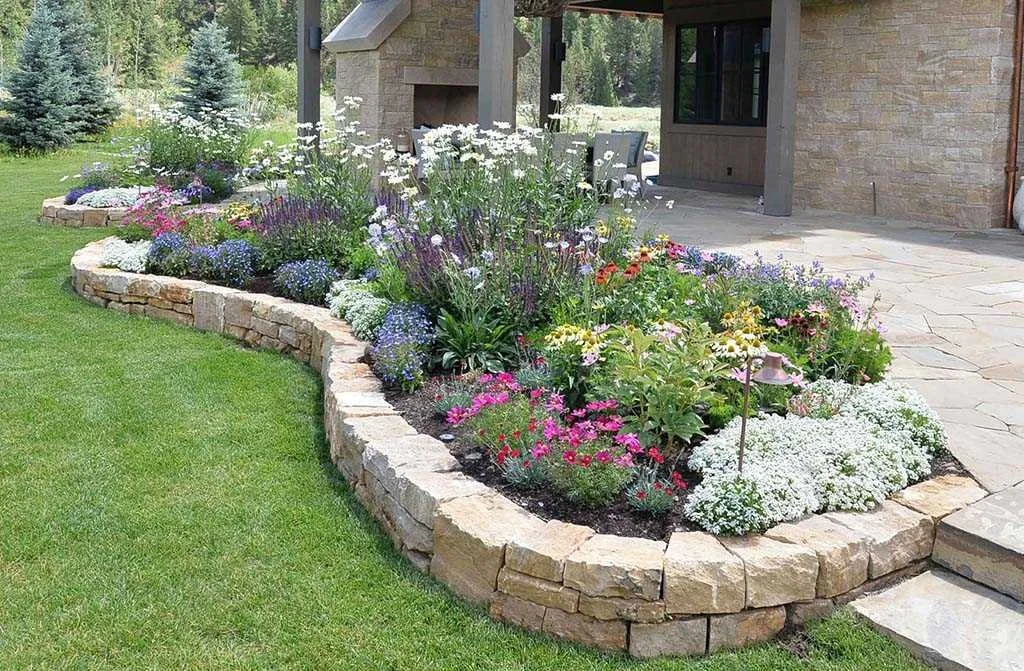
The better approach is strategic: the right plants, in the right places, properly spaced, and consistently maintained. Native Colorado plants with high live fuel moisture content create a living fire barrier that slows ember transport, reduces radiant heat, and stays hydrated even through dry summers at altitude. A well-designed fire-resistant landscape can be genuinely beautiful — native wildflower islands, rock gardens, aspen clusters, flagstone paths — while providing meaningful fire protection that bare dirt simply doesn't.
This guide covers the science of what makes a plant fire-resistant, specific plant recommendations for each defensible space zone, what to remove (and what to replace it with), design principles that balance safety with aesthetics, and the ongoing maintenance that keeps a fire-resistant landscape effective year after year.
If you're starting from scratch after completing defensible space work, or if you want to redesign an existing landscape with fire safety in mind, this is your roadmap. For the specific defensible space requirements in Boulder County, see our fire mitigation guide Boulder County's fire mitigation requirements. For how fire-resistant landscaping connects to your insurance, see our wildfire insurance guide wildfire insurance guide.
What Makes a Plant Fire-Resistant? The Science Behind Firewise Landscaping
No plant is truly fireproof. Under extreme conditions — high heat, low humidity, strong winds — almost any vegetation can burn. But "fire-resistant" is a meaningful distinction. It means a plant is slower to ignite, produces less heat when it does burn, and is less likely to carry fire from the wildland to your home.
Colorado State University Extension uses a flammability scoring system that rates plants from 1 to 10, with 10 being the least flammable. The characteristics that earn high scores are consistent and measurable.
High live fuel moisture content is the most important factor. This refers to the water stored inside living plant tissue — not how much you water the plant, but how much moisture the plant naturally retains in its leaves and stems. Native Colorado plants generally maintain higher live fuel moisture than many exotic species, because they've evolved to store water efficiently in a semi-arid climate. This is one of the strongest arguments for native plants in fire-resistant landscaping: they're adapted to hold onto moisture even when conditions get dry.
Low resin, oil, and wax content matters because these volatile compounds are fuel. Plants with high concentrations of resins and oils — most conifers, junipers, rosemary at scale — burn hot and fast. Plants with fleshy, succulent tissues and minimal volatile compounds resist ignition much longer.
Succulent or fleshy structure stores water and resists ignition. Think prickly pear cactus, yucca, sedum, hens and chicks. These plants are essentially water reservoirs that an ember can land on without igniting.
Open, airy branching means less dense fuel load. A plant with an open structure has less material to burn per square foot of canopy than a dense, tightly branched species.
Low-growing habit keeps flames close to the ground where they're less dangerous than in the canopy. Ground covers and low perennials are inherently safer near structures than tall shrubs or trees.
There's also an interesting correlation that CSU research has identified: salt tolerance often predicts fire resistance. Plants adapted to salty soils tend to be harder to ignite. If a plant thrives in alkaline, mineral-rich Colorado soils, there's a good chance it's also relatively fire-resistant.
On the other end of the spectrum, the plants that score worst on flammability have high resin content, dense branching that accumulates dead material, peeling or shredding bark that catches embers, and evergreen foliage that retains dry needles or leaves year-round. The most common high-flammability plants in Colorado landscapes are junipers, pines, firs, spruces, Gambel oak, three-leaf sumac, and mountain mahogany.
Best Fire-Resistant Plants for Each Defensible Space Zone in Colorado
The defensible space framework divides the area around your home into three zones, each with different management standards. What you plant — and how you plant it — should vary by zone. Here are specific recommendations for Colorado's Front Range and mountain communities.
Immediate Zone: 0–5 Feet from Structures
This is the most critical zone, and the simplest in terms of planting: keep it almost entirely noncombustible. The 0–5 foot perimeter around your home should be hardscape — pea gravel, flagstone, decomposed granite, river rock, pavers, or concrete. No wood mulch. No bark. No rubber mulch (which is also flammable).
If you want any plant material in this zone, it should be extremely limited: low-growing annuals or perennials in removable containers, well-irrigated and maintained. Nothing should touch your structure, grow under your eaves, or contact your siding or deck.
Zone 1 ground surface options: pea gravel (native plants love being planted in it), flagstone with gravel fill, decomposed granite, river rock, concrete pavers. For a warmer aesthetic than bare gravel, consider a flagstone patio or walkway that serves as both a design feature and a noncombustible perimeter.
Intermediate Zone: 5–30 Feet — Your Main Planting Area
This is where fire-resistant landscaping gets interesting. Zone 2 is your primary planting zone — the area where thoughtful plant selection and design make the biggest difference.
Ground Covers
Kinnikinnick (Arctostaphylos uva-ursi) is one of the best fire-resistant ground covers for Colorado. It's a native evergreen that stays low (6–12 inches), has leathery leaves with good moisture content, produces red berries, and tolerates poor soil. It spreads slowly to form dense mats that crowd out weeds.
Creeping Mahonia (Mahonia repens), also called Oregon grape, is another native standout — low-growing, shade-tolerant, with holly-like leaves and yellow spring flowers followed by blue berries. It works well under the canopy of properly spaced trees.
Ice Plant (Delosperma varieties) provides vivid color — bright pink, orange, yellow, purple — from succulent foliage that's essentially a water reservoir. These plants are extremely fire-resistant because they're so full of moisture. They're originally from South Africa, not native, but they've become ubiquitous in Colorado landscapes and they do the job.
Red Creeping Thyme (Thymus praecox 'Coccineus') forms aromatic, mat-like coverage that's low-flammable and drought-tolerant. It handles foot traffic, blooms purple-pink, and attracts pollinators.
Prairie Smoke (Geum triflorum) is a Colorado native with feathery seed heads and pink spring blooms. Low-growing and effective in rocky soil or part shade.
Perennials
Blanket Flower (Gaillardia) is a Colorado staple — fire-resistant, drought-tolerant, and blooms all summer in red-and-yellow bursts. Its sparse foliage and low resin content earn it a high safety score.
Lavender works well in the intermediate zone: aromatic, drought-tolerant, with an open structure and low fuel load. Space plants generously.
Catmint (Nepeta) provides similar benefits — aromatic, low-growing, open structure, and prolific blue-purple blooms that attract pollinators.
Rocky Mountain Penstemon is a Colorado native with tubular flowers that hummingbirds love. Fire-resistant, drought-tolerant, and beautiful.
Yarrow and Coneflower (Echinacea) round out a strong perennial palette — both are native, drought-adapted, fire-resistant, and provide long-season color and pollinator support.
Shrubs
Serviceberry (Amelanchier alnifolia) is one of the best fire-resistant shrubs for Colorado. It's native, produces white spring flowers and edible berries, and has open branching with good moisture content. Prune to maintain airflow and space at least twice the mature height apart.
Currant (Ribes species) — wax currant and golden currant are both native, fire-resistant, and wildlife-friendly. They stay manageable in size and tolerate a range of conditions.
Rabbitbrush (Ericameria nauseosa) blooms bright yellow in late summer when little else is flowering. Its open, airy structure makes it fire-resistant despite being common in dry areas. Good pollinator plant.
Sumac (Rhus species) — three-leaf sumac and smooth sumac provide brilliant fall color. They need regular pruning to keep them open and manageable, but they're relatively fire-resistant when maintained.
Succulents
Prickly Pear (Opuntia species) is exceptionally fire-resistant. The thick, moisture-filled pads are nearly impossible to ignite. Native to Colorado, drought-proof, and surprisingly attractive when flowering.
Yucca (Yucca glauca and Yucca filamentosa) — the fleshy, moisture-retentive leaves make ignition difficult even in extreme heat. Architectural and dramatic.
Hens and Chicks (Sempervivum) — succulent rosettes that spread into colonies. Almost entirely composed of stored water. Excellent for rock gardens and Zone 2 borders.
Extended Zone: 30–100+ Feet
Zone 3 is about thinning and managing, not about specific planting. But if you're adding trees, choose wisely.
Aspen (Populus tremuloides) is the gold standard for fire-resistant trees in Colorado. High moisture content, smooth bark that doesn't catch embers, deciduous (drops leaves, reducing winter fuel load), and naturally forms groves that resist fire spread better than individual trees. Aspens are often the trees left standing after a wildfire moves through.
Rocky Mountain Maple (Acer glabrum) — deciduous, moisture-rich leaves, smooth bark. A smaller tree that works well as an understory species.
Ponderosa Pine — this is a nuanced recommendation. Ponderosa pines are native, ecologically important, and have thick bark that makes mature trees relatively fire-resistant. But they need proper management: crown spacing of 10–15 feet between trees, lower branches pruned to 6–10 feet above ground to eliminate ladder fuels, and accumulated needles cleared regularly. An unmanaged ponderosa is a fire hazard; a properly maintained one can be part of a fire-resilient landscape.
For ground management in Zone 3, keep native grasses (buffalo grass, blue grama) mowed to 6 inches during fire season. Thin dense shrub groups. Remove dead standing trees. Create fuel breaks along driveways and access routes.
High-Risk Plants to Remove or Relocate from Your Colorado Landscape
Knowing what NOT to have near your home is just as important as knowing what to plant. Some of Colorado's most popular landscaping plants are also the most dangerous in a wildfire scenario.
Remove from Zones 1 and 2 (Within 30 Feet of Structures)
Junipers — all species. This is the single most important removal for most Colorado homeowners. Junipers are extremely flammable: high volatile oil content, dense branching that accumulates dead material, and a tendency to retain dry foliage. They burn fast and hot. Many Colorado homes have juniper foundation plantings that date back decades — and those junipers are among the most dangerous elements in the landscape. Replace with serviceberry, currant, or rabbitbrush for a similarly sized shrub with dramatically lower fire risk.
Arborvitae. Same issues as juniper — dense, resinous, and retains dead material. A common hedge plant that's essentially a wall of fuel next to your home. Replace with a metal or stucco fence, or a widely spaced row of serviceberry.
Ornamental grasses — pampas grass, miscanthus, fountain grass. These accumulate dry, dead material that ignites easily and throws embers. Beautiful in the right context, but not within 30 feet of structures in fire country. Replace with low native grasses kept short, or with perennial beds of blanket flower and yarrow.
Manage or Relocate
Spruce and Fir. Low branches create ladder fuels that carry ground fire into the canopy. Resinous needles burn intensely. If you keep spruce or fir within Zone 2, remove all branches below 10 feet and ensure the crown is at least 15 feet from any other tree or your structure.
Gambel Oak. Retains dead leaves through winter, creating a persistent fuel source. Dense growth pattern makes management difficult. Thin aggressively if present in Zones 2 or 3.
Mountain Mahogany. Resinous and dense. Manage rather than remove — prune to open the structure, remove dead material, and space well away from other plants.
The Mulch Question
Wood mulch within 5 feet of your home is an ember ignition risk. A single ember landing in dry bark mulch can smolder and ignite, spreading fire to your foundation, siding, or deck. Replace all wood mulch in Zone 1 with pea gravel, decomposed granite, or river rock.
Beyond 5 feet, wood mulch is acceptable if it's irrigated and not too deep (2–3 inches maximum). Overhead irrigation is preferable to drip in mulched areas, because it wets the mulch surface where embers would land. But pea gravel is always the safer and lower-maintenance choice — and native plants actually prefer being planted in it.
Rubber mulch is also flammable and should be avoided in fire-prone landscapes.
Fire-Resistant Landscape Design: Principles That Balance Safety and Beauty
The single most important insight from fire-resistant landscape experts is this: how you plant and where you plant matters more than what you plant. A perfectly fire-resistant plant species becomes a fire hazard if it's planted in a continuous bed against your foundation with dead material accumulated at its base.
These design principles create landscapes that are both beautiful and functional as fire defense:
Plant in islands, not continuous beds. Small, irregular clusters of plants separated by gravel or rock pathways prevent continuous fuel and create natural fire breaks. Think of your landscape as a series of garden vignettes — a cluster of blanket flower and catmint here, a succulent rock garden there, connected by flagstone paths and gravel. This design approach actually creates more visual interest than a continuous border, and it's dramatically safer.
Use hardscape as fire breaks. Gravel paths, stone patios, retaining walls, boulder arrangements, and flagstone walkways all serve as fire breaks while adding design interest. This is where fire safety and landscape design naturally align — the same elements that stop fire also define garden rooms, create walking paths, and provide structure. If you're designing outdoor living spaces outdoor living spaces, hardscape features do double duty as both amenity and fire protection.
Hydrozone your plantings. Group plants with similar water needs together so you can irrigate efficiently and keep everything well-hydrated. A well-watered landscape resists fire dramatically better than a dry one. Overhead irrigation is preferred over drip for fire resistance, because it wets surrounding soil and mulch surfaces where embers might land. If you're also interested in water-wise landscaping, there's significant overlap between drought-tolerant native plants and fire-resistant species — many of the same plants serve both purposes. See our guide on xeriscaping xeriscaping for more on water-efficient landscape design.
Eliminate ladder fuels through vertical layering. "Ladder fuels" are the vegetation that carries fire from ground level up into the tree canopy — low shrubs under trees, branches reaching from the ground into the crown, vines climbing trunks. Remove all vegetation from directly under trees. Prune tree branches to at least 6–10 feet above ground. The general rule is 3 times the height of the understory vegetation — if grass grows 2 feet tall, the lowest branches should be at least 6 feet up.
Design for slopes. Fire moves faster uphill. If your property has significant slope, extend your management zones further downhill and use ground covers (sedum, ice plant, kinnikinnick) on slopes to slow fire progression. Rock retaining walls on slopes serve as both erosion control and fire breaks.
Plant for diversity. Use different species throughout your landscape. If one species gets a disease, is hit by drought stress, or suffers winter damage — any of which creates dry, dead fuel — the rest of your landscape survives. Monocultures are both aesthetically boring and a fire risk.
Design for maintenance access. If you can't easily rake, mow, prune, and clear debris throughout your landscape, it will accumulate. Wide paths, accessible beds, and manageable plant sizes ensure that ongoing maintenance actually happens.
What a Beautiful Fire-Resistant Landscape Actually Looks Like
This is worth emphasizing: the best firewise landscapes in Colorado don't look like cleared lots or gravel pits. They look like intentional, thoughtfully designed gardens. Picture native wildflower islands surrounded by decomposed granite paths. Aspen groves with clean trunks and a carpet of kinnikinnick beneath. Flagstone patios ringed with lavender and blanket flower. Succulent rock gardens with prickly pear, yucca, and hens and chicks arranged among boulders. A dry creek bed with river rock winding through clusters of rabbitbrush and currant.
Fire-resistant doesn't mean barren. It means designed.
Maintaining Your Fire-Resistant Landscape: The Work That Keeps It Working
A fire-resistant landscape is not a one-time project. Plants grow, debris accumulates, spacing closes, and conditions change with every season. The landscape that protects your home in Year 1 can become a liability by Year 3 without regular maintenance. Here's what ongoing care looks like:
Seasonal Maintenance
Spring (March–May): Clear winter debris — fallen branches, accumulated needles, windblown leaves. Prune and thin shrubs to maintain open structure and proper spacing. Divide overgrown perennials that have spread into each other. Check and activate irrigation systems. This is also the best time for any new planting.
Summer (June–August): Mow native grasses to 6 inches throughout the fire season. Water actively — a hydrated landscape resists fire far better than a dry one. Remove dead flower stalks and dried material. Check the 0–5 foot zone weekly for debris that has blown in or accumulated. This is peak fire season: your landscape should be at its leanest and greenest.
Fall (September–November): Clear fallen leaves, especially from gutters, the 0–5 foot zone, and under decks. Cut back perennials. Last mow of the season. Pre-winter cleanup of all three zones. This is a good time to evaluate the season and plan any changes for spring.
Winter (December–February): Remove downed branches after storms. Monitor the noncombustible zone for windblown debris accumulation. Winter wildfires happen in Colorado — the Marshall Fire was in December. Keep the immediate zone clear year-round.
Annual Assessment
Once a year, walk your entire property with fresh eyes:
Check plant health. Dying or dead plants become fuel. Replace anything that isn't thriving — it's not contributing to fire resistance if it's dried out.
Evaluate spacing. Plants grow. What was properly spaced three years ago may be touching now. Prune back, divide, or remove plants that have closed gaps between clusters.
Refresh Zone 1. Top off pea gravel or decomposed granite if it's thinned. Check that nothing has encroached into the 0–5 foot noncombustible zone.
Confirm tree clearance. Are lower branches still pruned to 6–10 feet? Have new branches grown into the cleared space? Are crown spaces still 10–15 feet apart?
Document everything. Under HB 1182, documented maintenance of your fire-resistant landscape counts as ongoing mitigation work that insurers must consider in your risk score. Take dated photos at least twice a year — once after spring cleanup and once after fall cleanup. Keep them in the same digital folder as your mitigation portfolio. For details on how this connects to your insurance, see our wildfire insurance guide wildfire insurance guide.
────────────────────────────────────────────────────────────
How Fire-Resistant Landscaping Affects Insurance and Property Value
The connection between your landscape and your insurance has never been more direct. Under Colorado's HB 1182 (effective July 2026), documented defensible space landscaping qualifies as property-specific mitigation that insurers must factor into their pricing.
Specifically, the law recognizes mitigation verified through certification programs (Wildfire Partners, IBHS) and community-level programs (Firewise USA community designation). If your community has achieved Firewise USA recognition — a national program administered by NFPA — that community-level mitigation also factors into individual property risk scores.
Some insurers already offer discounts or favorable terms for homes with documented fire-resistant landscaping. The combination of a certified property (through Wildfire Partners or similar), a well-maintained fire-resistant landscape, and thorough documentation creates the strongest possible insurance position.
Beyond insurance, property value is increasingly influenced by fire preparedness. Buyers in WUI areas — and their lenders, inspectors, and insurance agents — are evaluating fire-resistant landscaping as a purchase criterion. A thoughtfully designed firewise landscape is an asset that signals responsible, informed homeownership. It's not a compromise; it's a feature.
────────────────────────────────────────────────────────────
Frequently Asked Questions About Fire-Resistant Landscaping in Colorado
What are the best fire-resistant plants for Colorado?
Top choices include kinnikinnick, serviceberry, rabbitbrush, blanket flower, ice plant (Delosperma), catmint, yarrow, coneflower, and prickly pear cactus. For trees, aspens are the gold standard — high moisture content, smooth bark, and deciduous. Native Colorado plants generally outperform exotics for fire resistance because they maintain higher live fuel moisture content even through dry periods. Avoid junipers, arborvitae, and ornamental grasses near structures.
Is wood mulch a fire hazard?
Within 5 feet of structures, yes — embers can ignite dry wood mulch and spread fire to your home. Replace with pea gravel, decomposed granite, or river rock in the immediate zone. Beyond 5 feet, irrigated wood mulch is acceptable at 2–3 inches deep, though gravel is always the safer choice. Native plants actually prefer growing in gravel. Rubber mulch is also flammable and should be avoided.
Can a fire-resistant landscape still look beautiful?
Absolutely, and this is the most common misconception. The best firewise landscapes use native wildflower islands, succulent rock gardens, flagstone paths, aspen groves, and boulder features to create intentional, visually rich designs. The key principle is planting in clusters separated by hardscape rather than in continuous beds — which actually creates more visual interest while being dramatically safer.
Do I need to remove all trees for defensible space?
No. Properly spaced and pruned trees are fine in Zones 2 and 3. Space tree crowns 10–15 feet apart, remove branches below 6–10 feet, and eliminate ladder fuels (shrubs or brush growing under tree canopies). Aspens are particularly fire-resistant. The trees to remove from within 30 feet of structures are junipers and dense, low-branched conifers.
How often should I maintain a fire-resistant landscape?
Seasonal maintenance is essential: spring cleanup and new planting, summer watering and weekly debris checks, fall leaf removal and pruning, and winter storm cleanup. Annual assessment of plant health, spacing, and Zone 1 condition keeps the landscape effective over time. An unmaintained fire-resistant landscape can become a fire hazard if plants die, debris accumulates, or spacing closes.
────────────────────────────────────────────────────────────
Your Landscape Is a Living System — Treat It Like One
A fire-resistant landscape isn't something you install and forget. It's a living system that changes with every season, every storm, and every year of growth. The plants that protect your home need the same ongoing attention as any other part of your property — pruning, watering, clearing, evaluating, and occasionally replacing.
This is exactly the kind of recurring, season-driven work that Willow Home coordinates for homeowners across Boulder County, Denver, and Colorado's mountain communities. Seasonal landscape maintenance through our maintenance plans seasonal maintenance plans includes debris clearing, irrigation oversight, pruning schedules, gravel refresh, and documentation for your insurance portfolio — the ongoing care that keeps a fire-resistant landscape working as designed.
If you've completed defensible space work and need help maintaining it, or if you're ready to redesign your landscape with fire resistance built in from the start, we'd welcome the conversation.
[Learn more about Willow Home's concierge home management services → link: concierge home management]
────────────────────────────────────────────────────────────
Willow is a luxury home concierge service based in Boulder, Colorado. We care about your home and giving you back your time to do the things you care about most.
How it Works