
Boulder Mountain Property Management: Coordinating Homes from Foothills to Peak
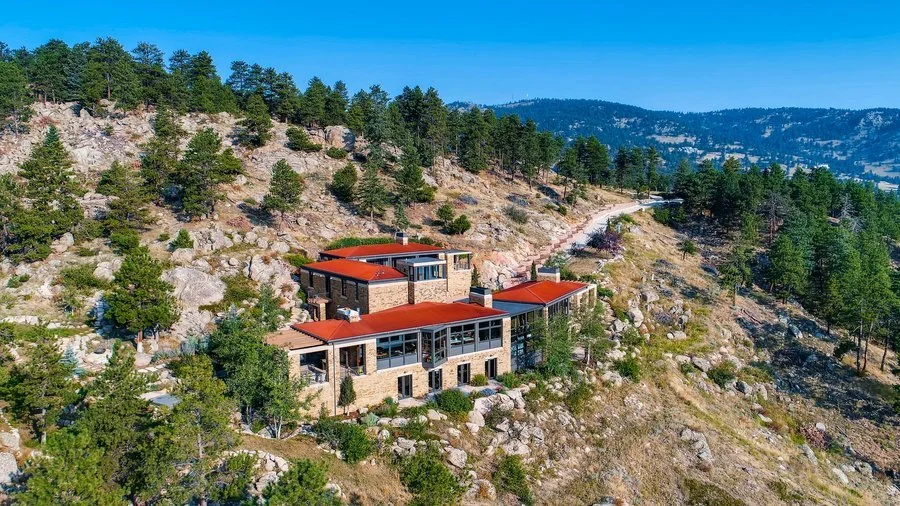
Managing a mountain home near Boulder is a fundamentally different proposition than managing a home in town. The same 10-mile distance that gives you Flatirons views, old-growth ponderosa, and genuine solitude also gives you private roads that the county doesn’t plow, septic systems instead of city sewer, well water instead of municipal supply, wildfire as an existential risk rather than an abstract one, wildlife that doesn’t just visit but lives alongside you, and a contractor pool that shrinks with every mile of elevation gain.
None of this means mountain living isn’t worth it — for the people who choose it, there is no substitute. But it does mean that the management burden is real, ongoing, and significantly more complex than what homeowners in Boulder’s in-town neighborhoods deal with. This guide covers the operational reality of keeping a Boulder mountain property safe, insured, maintained, and functional year-round. For what it’s like to live in these communities, see our guides to Flagstaff Mountain, Sunshine Canyon, Pine Brook Hills, and Gold Hill. This article covers how to manage them.
Mountain vs. In-Town: What’s Different
| System | In-Town Boulder | Mountain Property |
|---|---|---|
| Roads | City plows, cleared in hours | Private/HOA/DIY, may be impassable days |
| Water | Municipal supply | Private well (you maintain) |
| Sewer | City sewer | Septic (pump every 3–5 yrs) |
| Fire | Boulder Fire, hydrants | Rural district, no hydrants, defensible space |
| Wildlife | Occasional deer/raccoons | Bears, lions, elk on property |
| Insurance | $1.5K–$3K/yr | $3K–$8K+/yr (wildfire surcharges) |
| Contractors | 15–20 min response | 30–60+ min, smaller pool |
| Winter access | Cleared daily | May be impassable in storms |
The fundamental difference isn’t that mountain properties need more maintenance — it’s that they need more coordination. In-town, the city handles roads, water, sewer, and fire infrastructure. On a mountain property, you manage all of those systems yourself or through an HOA, plus fire mitigation, wildlife management, and a vendor network that’s harder to assemble and schedule. The work is manageable. The logistics are what overwhelm homeowners.
Fire Mitigation: The Non-Negotiable
Wildfire mitigation isn’t a project you complete once. It’s an ongoing management responsibility that touches your property every year and your insurance every renewal cycle. The Fourmile Canyon Fire in 2010 destroyed 169 homes in the mountains west of Boulder. The Marshall Fire on December 30, 2021 — the most destructive wildfire in Colorado history — leveled 1,084 homes in communities that most people never considered fire-prone. Both events permanently changed how Boulder County approaches fire mitigation.
What the Management Looks Like
Annual defensible space maintenance is the baseline. Tree thinning, brush clearing, needle removal from gutters and roofs, maintaining the noncombustible zone within five feet of the structure, and keeping the 15-to-100-foot management zone thinned to recommended densities. Professional wildfire mitigation services typically cost $3,000 to $8,000 annually depending on lot size and vegetation density.
Wildfire Partners certification is Boulder County’s nationally recognized program. A certified assessor evaluates your property, produces a prioritized action list, and certifies completion. The certification is increasingly important for insurance — starting July 2026, Colorado’s new insurance law (HB 1182) requires insurers to factor documented mitigation into pricing for the first time. Documented Wildfire Partners certification will directly impact your premium.
Forestry contractor coordination is where the management burden hits. Tree crews book three to six months in advance during season. Slash disposal, stump grinding, and follow-up thinning all require scheduling. After every major windstorm, debris accumulates and the noncombustible perimeter needs re-inspection. Documentation needs updating for insurance renewals.
Insurance documentation is the piece most homeowners underestimate. Colorado homeowner insurance premiums have climbed 57.9 percent between 2018 and 2023, driven largely by wildfire and hail claims. Mountain properties without documented mitigation are increasingly being non-renewed or priced out of the private insurance market. Keeping mitigation records current, providing documentation for renewals, and navigating non-renewals is now a core management task.
For the complete regulatory framework, see our Boulder County fire mitigation requirements guide. For home hardening strategies, see our fire mitigation guide.
Septic System Management
Most Boulder mountain properties use septic systems instead of city sewer. A well-maintained septic system lasts 15 to 40 years. A neglected one fails in ways that cost $15,000 to $50,000 or more to fix — and on a mountain property where the leach field may be on sloped terrain with limited excavation access, replacement costs can push even higher.
The Management Calendar
Pumping should happen every three to five years depending on household size and system capacity. Mountain properties with seasonal or part-time use can extend this slightly, but skipping it entirely is how systems fail. Most septic pumping services in Boulder County charge $350 to $600 per visit.
Inspections are recommended at least every 10 years by Boulder County, but best practice for mountain properties is every three to five years. The freeze-thaw stress at elevation is more severe, and mountain systems face steeper terrain, shallower soil, and more temperature variation than in-town systems. Professional inspections run $300 to $500.
Daily management makes a bigger difference than homeowners realize. The system is designed to handle about 75 gallons per person per day. A leaky toilet can waste 200 gallons daily — enough to overwhelm a system by itself. Don’t use a garbage disposal (adds sludge that accelerates pumping needs). Don’t flush anything that doesn’t decompose. Don’t use septic additives — some chemicals can harm the biological process the system depends on. Don’t park vehicles or drive over the system or the leach field.
Winter considerations add a mountain-specific layer. At 6,500 to 7,200 feet, leach fields can freeze more deeply than at lower elevations. Insulation over the leach field (maintain grass cover, don’t remove snow from the field area), heat tape for exposed pipes, and thermostatically controlled heating in pump chambers are standard mountain protections.
Records matter more than homeowners think. Boulder County Public Health maintains online records for all approved systems. Keep all inspection, pumping, and repair receipts. Buyers will request this documentation at sale, and incomplete records raise red flags that can delay or kill a transaction.
Well Water Systems
Properties not on Boulder’s municipal water supply rely on private wells. You own the pump, the pressure tank, the filtration system, and the responsibility for water quality. The management requirements are straightforward but the consequences of neglect are not.
Annual water testing is essential. Test for coliform bacteria, nitrates, and any contaminants specific to your local geology. Mountain properties near old mining areas — particularly around Gold Hill and upper Lefthand Canyon — may need additional testing for heavy metals. Testing costs $100 to $300 per year depending on the panel.
Pump and pressure tank maintenance keeps the system delivering water consistently. Pressure tanks should be checked annually. Well pumps at elevation work harder due to greater lift distance and should be inspected every three to five years. Pump replacement runs $1,500 to $4,000 depending on well depth and pump type.
Flow rate monitoring catches problems early. Well yield can change with drought, nearby development, and seasonal water table fluctuations. Know your baseline flow rate (it’s in your well permit documentation) and monitor for decline. A well that produces 10 gallons per minute in spring may drop to 3 gallons per minute during a drought summer — and if you don’t know until you’re running the shower and the washing machine simultaneously, you’ll find out the hard way.
Winter protection is more critical at elevation. Well houses need insulation and heat. Frozen well lines at 7,000 feet are a different proposition than frozen pipes at 5,430 feet — the ambient temperatures are colder, the response time from plumbers willing to drive to mountain properties is longer, and the damage from a frozen and burst well line can leave you without water until the line is excavated and replaced. Heat tape, insulated pipe wrapping, and thermostatically controlled heating in well houses are baseline requirements at mountain elevations.
Winter Access and Snow Management
Winter is when mountain property management becomes most demanding. Everything that’s manageable in August becomes a logistics exercise in January.
Road and Driveway Plowing
Pine Brook Hills has HOA-managed private roads — dues cover road maintenance and plowing, though timing and priority vary during active storms. Sunshine Canyon properties may have shared private plow services, informal neighbor arrangements, or DIY. Flagstaff Mountain properties face similar variability. Know your road’s plowing status before winter. If you’re buying a mountain property, ask the seller specifically who plows the road, what the arrangement costs, and how long access can be lost during major storms.
Mountain driveways require heavy equipment. Steep grades, tight turnarounds, and elevation all limit what plow operators can do. Not every in-town plow service will drive mountain roads — the liability, the fuel, and the travel time make it uneconomical for operators whose customer base is in the flatlands. Book a mountain-experienced plow operator before the first snow. October is already late for some operators.
Emergency Access
Can emergency vehicles reach your property in winter? Boulder County uses a tiered road priority system. Residential mountain roads can be lower priority during active storms, meaning hours or even a full day before your road is cleared. This has real consequences for medical emergencies, fire response, and infrastructure failures (burst pipes, power outages). Know your property’s emergency access status and plan accordingly — this is a legitimate factor in insurance underwriting.
Chinook Winds
Boulder County experiences some of the strongest winds in the country. Gusts have been measured up to 147 miles per hour. Chinook winds blow from the west over the Continental Divide and hit the foothills first and hardest. They’re warm and dry — they melt snow quickly but cause structural damage: fallen trees on roofs and power lines, displaced roofing, downed fences, and scattered debris. Every major wind event should trigger a property inspection, especially for mountain properties where tree canopy is close to structures.
Power Outages and Generators
Mountain properties lose power more frequently and for longer than in-town properties. Downed trees and high winds take out power lines that serve fewer customers, so restoration priority is lower. A whole-house generator is not a luxury at elevation — it’s infrastructure. Without power, your well pump doesn’t run (no water), your septic system’s pump chamber doesn’t operate, your heating fails, and your pipes freeze. Generator fuel and annual maintenance run $500 to $1,500 per year. The alternative — a multi-day power outage in January at 7,000 feet — can cause tens of thousands of dollars in freeze damage.
For the full cold-season protocol, see our winter home maintenance checklist.
Wildlife Management at Elevation
Mountain properties don’t face different wildlife than in-town properties — they face more of the same wildlife, more often, with more intensity. The bears, mountain lions, raccoons, and deer covered in our Boulder wildlife management guide are all present in the foothills, but at elevation you’re in their habitat rather than adjacent to it.
Bears are near-daily visitors to Flagstaff and Sunshine Canyon properties during fall hyperphagia season. Mountain lion corridor activity is routine, not exceptional, at elevation. Elk herds move through Pine Brook Hills seasonally, and landscaping damage is essentially guaranteed without fencing. Woodpecker damage to fascia and siding is more severe where homes are surrounded by forest, because more trees mean more insects, which means more foraging.
The management implication: wildlife-proofing is a year-round commitment on mountain properties, not a seasonal check. Bear-resistant containers, entry point sealing, chimney screening, livestock protection, and landscaping choices all need attention on a recurring schedule. See our complete wildlife management guide for species-by-species prevention and the seasonal calendar.
The Vendor Challenge: Why Mountain Properties Need More Coordination
This is the section that captures why professional property management is especially valuable for mountain homes. The work itself is similar to in-town work. The logistics of getting it done are what overwhelm homeowners.
Contractor availability is the first constraint. Not every Boulder plumber, electrician, HVAC technician, or painter will drive Flagstaff Road or Sunshine Canyon, especially in winter. The available pool is smaller, which means less competition for your business, longer scheduling windows, and sometimes higher rates. Building relationships with mountain-experienced vendors — or working with someone who already has those relationships — is essential.
Response time is the second constraint. A burst pipe at 7,000 feet in January takes 30 to 60 or more minutes for a plumber to reach, versus 15 to 20 minutes in town. That’s 30 to 40 additional minutes of water flowing. A power outage affecting a mountain property may not be restored for hours or days, while the same outage in town is resolved in minutes. Every emergency is more consequential because help takes longer to arrive.
Material delivery is the third constraint. Building materials, landscaping supplies, and heavy equipment all face access limitations on narrow mountain roads with limited turnarounds. Deliveries need to be planned carefully — and scheduled for times when the road is accessible, which may be a narrower window than you think during spring mud season or winter storms.
The vendor count is the fourth constraint. A fully managed mountain property requires coordination across 8 to 12 specialized vendors: fire mitigation crews, septic pumpers, well testers, plow operators, tree services, wildlife exclusion specialists, general contractors, electricians, plumbers, HVAC technicians, and gutter/roof maintenance crews. Each has their own schedule, their own seasonal window, and their own access requirements. Coordinating all of them on a mountain property where access is weather-dependent and scheduling is constrained by elevation logistics is a genuine management challenge.
For general guidance on finding reliable contractors in Boulder and navigating the vetting process, see our contractor guide. For a deeper look at the real cost of contractor coordination and why professional management often pays for itself, see our coordination cost analysis.
Annual Mountain Property Costs: The “Mountain Premium”
Mountain homeownership carries an annual cost premium above what the same size home would require in Boulder proper. This premium covers the infrastructure that the city provides for in-town properties but mountain homeowners manage themselves.
| Cost | Annual Range | Notes |
|---|---|---|
| Fire mitigation | $3K–$8K | Defensible space, tree thinning |
| Septic (annualized) | $150–$350 | Pumping + inspection spread over cycle |
| Well water testing | $100–$300 | Annual testing required |
| Well system maintenance | $200–$500 | Pump, pressure tank, filtration |
| Snow removal | $1.5K–$4K | Mountain-experienced operator |
| HOA dues (if applicable) | $500–$2K | Private road maintenance |
| Insurance (mountain) | $3K–$8K+ | vs $1.5K–$3K in-town |
| Generator | $500–$1.5K | Fuel + annual service |
| Wildlife proofing | $500–$2K | Bear-resistant, exclusion, repair |
| Exterior premium | +15–25% | UV/altitude accelerates degradation |
| TOTAL PREMIUM | $8K–$20K+/yr | Above in-town costs |
This premium isn’t deferred maintenance or a luxury tax. It’s the actual cost of operating infrastructure — water, sewer, roads, fire protection — that the city provides for in-town properties through taxes and fees. Mountain homeowners pay it directly, and the management burden of coordinating all of it falls on them.
Boulder’s Mountain Communities
The specific challenges vary by community, but the management framework is the same.
Flagstaff Mountain sits at 6,000 to 7,000 feet, accessed via the winding Flagstaff Road. Some of Boulder’s most dramatic views and most demanding maintenance. The road is steep, narrow, and challenging in winter. Properties range from modest cabins to multi-million-dollar estates. Fifteen to twenty minutes to downtown Boulder in good weather, significantly longer during storms.
Sunshine Canyon spans 6,200 to 8,000 feet along Sunshine Canyon Drive. A mix of cabins, contemporary homes, and historic structures. The road is narrow with limited turnarounds, creating delivery and access challenges. More remote than Flagstaff but with a distinct community identity.
Pine Brook Hills is the most organized mountain community, with roughly 400 homes at 6,500 to 7,200 feet spread across mountain terrain west of Boulder. The HOA maintains private roads, enforces architectural covenants, and provides a level of community infrastructure that other mountain neighborhoods lack. Streets like Raintree Court and Overland Trail wind through pine and aspen forest. The trade-off for the organization is HOA dues and covenants.
Gold Hill is Boulder’s historic mining town at 8,500 feet — the most remote and most elevation-dependent community. Year-round living at this altitude requires serious preparation: deeper freeze, more snow, longer power outages, and fewer services. The community’s historic character adds charm but also adds maintenance complexity for older structures.
Boulder Heights, Lakeridge, Lee Hill, and Lefthand Canyon round out the foothills communities with similar management profiles. Each has its own road situation, fire district, and community structure, but the underlying challenges — fire, septic, well, access, wildlife, vendors — are shared across all of them.
Frequently Asked Questions
How much does it cost to maintain a mountain home near Boulder?
Mountain homeownership carries an annual premium of $8,000 to $20,000 or more above in-town Boulder, covering fire mitigation ($3,000–$8,000), septic and well maintenance ($500–$1,200), snow removal ($1,500–$4,000), elevated insurance ($3,000–$8,000+), and generator costs ($500–$1,500). The premium covers infrastructure that the city provides for in-town properties.
Do I need professional property management for a mountain home?
Not necessarily for the work itself, but for the coordination. Mountain properties require 8 to 12 specialized vendors — fire mitigation crews, septic pumpers, well testers, plow operators, tree services, wildlife specialists, and general contractors — on seasonal schedules with access constraints that don’t apply in town. Professional management pays for itself in time saved, problems prevented, and vendor relationships maintained.
What’s different about insuring a mountain home in Boulder?
Wildfire risk drives significantly higher premiums — $3,000 to $8,000 or more per year versus $1,500 to $3,000 in-town. Some insurers non-renew mountain properties without documented fire mitigation. Colorado’s HB 1182, effective July 2026, requires insurers to factor mitigation into pricing. Documented Wildfire Partners certification directly impacts premiums. Keeping mitigation records current is now a core management task.
How often should I pump a septic system on a Boulder mountain property?
Every three to five years depending on household size and system capacity. Inspections every three to five years is best practice for mountain systems where freeze-thaw stress is more severe. Keep all records — Boulder County Public Health maintains online records, and buyers will request documentation. Pumping costs $350 to $600 per visit. System replacement if it fails runs $15,000 to $50,000 or more.
Who plows mountain roads near Boulder?
It depends on your community. Pine Brook Hills HOA maintains private roads and plowing is included in dues. Some Sunshine Canyon and Flagstaff communities have shared private plow services or informal arrangements. Boulder County maintains county roads on a tiered priority system, but residential mountain roads can be lower priority during active storms. Book a private plow operator before October for driveway plowing.
Is it harder to find contractors willing to work on mountain properties?
Yes. Not every Boulder contractor will drive mountain roads, especially in winter. The available pool is smaller, response times are longer (30 to 60 or more minutes versus 15 to 20 in town), and scheduling requires more advance planning. Building relationships with mountain-experienced vendors is essential. A property manager who already has those relationships can eliminate the search-and-schedule burden.
Mountain Properties Are Willow’s Strongest Use Case
Mountain property management is the most compelling case for professional home concierge services. The vendor coordination, seasonal scheduling, fire mitigation oversight, septic and well tracking, winter access management, wildlife-proofing, and insurance documentation that mountain properties require is exactly the kind of multi-system, multi-vendor, calendar-driven work that’s difficult to manage yourself and expensive to get wrong.
Willow Home manages mountain properties across Flagstaff Mountain, Sunshine Canyon, Pine Brook Hills, and Boulder’s foothills communities. We coordinate fire mitigation contractors, schedule septic inspections and well testing, manage plow operators, oversee vendor access on mountain roads, maintain insurance documentation, and keep the seasonal maintenance calendar running so property owners can focus on the reason they chose mountain living in the first place — the views, the quiet, and the forest, not the vendors and the logistics.
For full-time mountain residents, we take the coordination burden off your plate. For second-home or absentee owners, we’re the management layer that keeps your mountain investment protected when you’re not there. See how Willow’s home concierge works or contact us to discuss your mountain property.
For the hands-on maintenance and repair work that mountain properties generate — deck repair, exterior painting, fascia work, gutter cleaning — Gage Home provides handyman services throughout Boulder County including foothills communities.
Willow is a luxury home concierge service based in Boulder, Colorado. We care about your home and giving you back your time to do the things you care about most.
How it Works